Citation Seeding vs Content Marketing: What Gets AI Results Faster?
A practical comparison of citation seeding (off-site brand placement) and content marketing (on-site authority building) for AI visibility. Covers speed to results, ROI, and when to prioritize each approach.

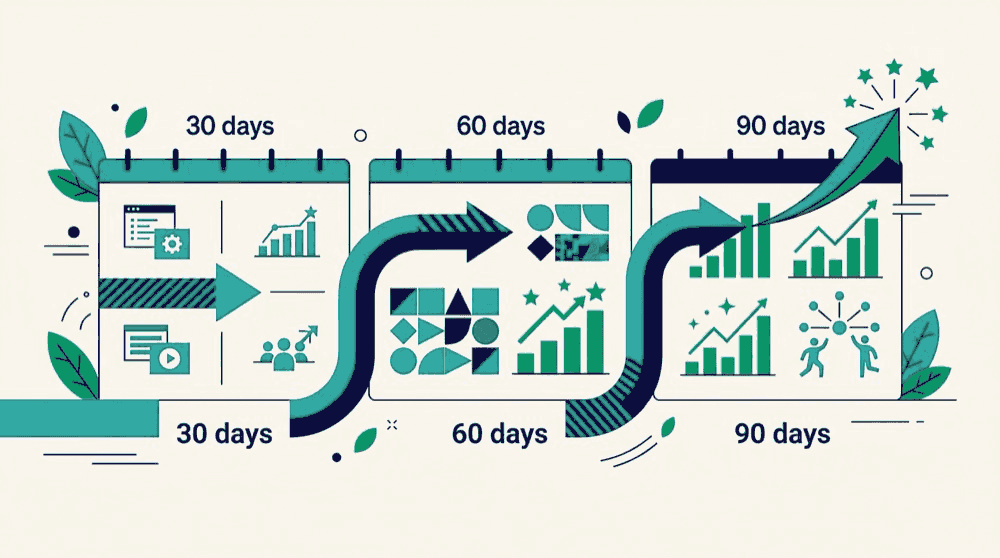
Citation seeding places brand mentions in sources AI models already cite, which you can compare against your Day 0 baseline at Days 30, 60, and 90. Content marketing builds durable on-site topical authority evaluated across longer quarterly review cycles. Running both in parallel lets you track early third-party citations alongside the on-site foundation that sustains them.
The Speed Question: Seeding vs Content Marketing
When brands discover they are invisible to AI search, the first question is always: what gets results fastest? Citation seeding — placing brand mentions in high-authority forum threads — delivers the quickest measurable impact. Content marketing — building comprehensive on-site topical authority — delivers the most durable results.
The data supports the parallel approach. Ahrefs' study of 75,000 brands found branded web mentions (r=0.664) have roughly 3x the correlation of backlinks (r=0.218) with visibility in Google\'s AI Overviews (favoring seeding), while structured sections and expert attribution make on-site content easier to extract. Both signals matter.
Measurement Checkpoints: A Direct Comparison
| Metric | Citation Seeding Checkpoint | Content Marketing Checkpoint |
|---|---|---|
| First AI mention | Compare at Day 30 vs Day 0 | Compare at Days 60 & 90 vs Day 0 |
| Share of Model comparison | Compare at Days 30 & 60 vs Day 0 | Compare at Days 60 & 90 vs Day 0 |
| Organic traffic growth | Indirect (AI referrals) | Compare at Day 90+ vs Day 0 |
| Citation retention review | Review at Day 90 | Review quarterly |
| ROI checkpoint | Evaluate at Days 60 & 90 vs Day 0 | Evaluate quarterly vs Day 0 |
| Compound growth pattern | Linear (per thread seeded) | Exponential (cluster effect) |
Citation seeding can be evaluated earlier because you are inserting your brand into sources AI models already retrieve. When you place a quality response in a Reddit thread that ranks #3 on Google, AI models encounter that thread on their retrieval cycle, so you can compare citation presence at your Day 30 checkpoint against your Day 0 baseline.
Content marketing requires a longer measurement horizon because you must first create content, wait for Google to index and rank it, and then track when AI models retrieve and cite it at your Day 60 and Day 90 checkpoints. The topical authority compounding effect means each new article reinforces the cluster over time.
ROI: Which Delivers More Per Dollar?
The ROI calculation depends on your time horizon and the value of each AI citation to your business.
Citation seeding ROI drivers: - Low cost per placement (primarily time/labor cost for response writing) - Earlier measurement checkpoint for initial citations (compare at Days 30 and 60 against Day 0) - AI referral traffic converts 4.4x better than organic - Seeded threads remain indexed across ongoing monthly audits - Scalable to 15-25 placements per month
Content marketing ROI drivers: - Higher upfront investment (content creation cost) - Evaluated over Day 60, Day 90, and quarterly checkpoints against Day 0 - Compound returns as content clusters mature - Each article supports both Google AND AI visibility - Creates owned assets (content on your domain) - Durable — a complete cluster generates citations for years with periodic updates
The combined ROI is greater than either alone. When seeded forum responses link back to your comprehensive on-site content, AI models see both third-party validation (the forum mention) and first-party depth (your website content). This multi-source consensus pattern triggers higher-confidence citations — and the critical shift from mere mention to active recommendation.
The ROI calculation framework provides specific formulas for measuring return from both channels. For the implementation sequence, the 90-day playbook schedules both activities in parallel.
How to Allocate Between Seeding and Content Marketing
The optimal allocation depends on your starting position and goals.
New brand or zero AI visibility: - Month 1: 70% seeding, 30% content marketing - Months 2-3: 50/50 - Month 4+: 40% seeding, 60% content marketing
Rationale: Seeding generates quick wins while you build your content foundation. As content matures, shift emphasis to on-site authority.
Established brand with strong website but poor AI visibility: - Month 1-2: 80% seeding, 20% content optimization - Month 3+: 50/50
Rationale: Your content exists — it just needs AI-facing optimization (structured sections, schema markup, expert quotes). Seeding immediately connects your existing authority to AI retrieval channels.
Agency managing multiple clients: - Use the 6-pillar audit to assess each client\'s starting position - Clients with low citation scores need heavy seeding - Clients with low entity/content scores need content investment - The agency workflow guide covers portfolio allocation
Outrigger provides the measurement infrastructure to track both channels — citation engine for seeding management and AI monitoring for tracking the combined impact on Share of Model.
Not sure where your seeding-versus-content balance should sit? A free AI visibility audit shows which channel your brand is most underinvested in right now — and where the fastest citation gains are hiding.
Frequently Asked Questions
Can I do citation seeding without any content on my website?
You can, and it will generate initial AI mentions. However, the impact is limited. When AI models find your brand mentioned in forums but cannot find comprehensive content on your website to validate the mention, they cite you with lower confidence. The result is mentions without recommendations. Build at least a core set of well-structured pages on your site alongside your seeding efforts.
How much content marketing do I need before seeding is effective?
A minimum viable content foundation includes: a well-optimized homepage, a clear product/service page, and 3-5 blog articles covering your core topic. This gives AI models enough on-site content to validate forum mentions. You do not need a complete content cluster to start seeding — but you should be building one in parallel.
Which approach is better for local businesses?
Local businesses benefit most from citation seeding because local service queries are heavily discussed in Reddit, Facebook Groups, and local forums. A plumber mentioned helpfully in a local subreddit thread gets cited by AI for local service queries faster than any amount of blog content. However, a well-optimized Google Business Profile and basic website content should be in place first.
Does content marketing help citation seeding work better?
Yes, significantly. When a seeded forum response says "I used [brand] for this — they have a good guide on it at [URL]," the AI model can follow that reference to your on-site content and find comprehensive, structured information. This cross-reference between third-party mention and first-party depth creates the multi-source consensus that triggers AI recommendations rather than just mentions.
Review Your AI Visibility Baseline
The free quick audit covers three core signal groups: Citations, AI Presence, and On-Page foundations. Review available findings and recommendations supported by the evidence the audit could verify.
Analyze your brandRelated Articles

Content Seeding Strategy: How to Place Your Brand in AI-Cited Threads

Content Marketing Strategy for 2026: How AI Changed What Works
LLM Seeding vs Link Building: Which Matters More in 2026?

The ROI of AI Visibility: How to Calculate and Prove Value